
Napoleon Cake – Discover What Napoleon Cake Is, Its History, and Ingredients
Table of Contents
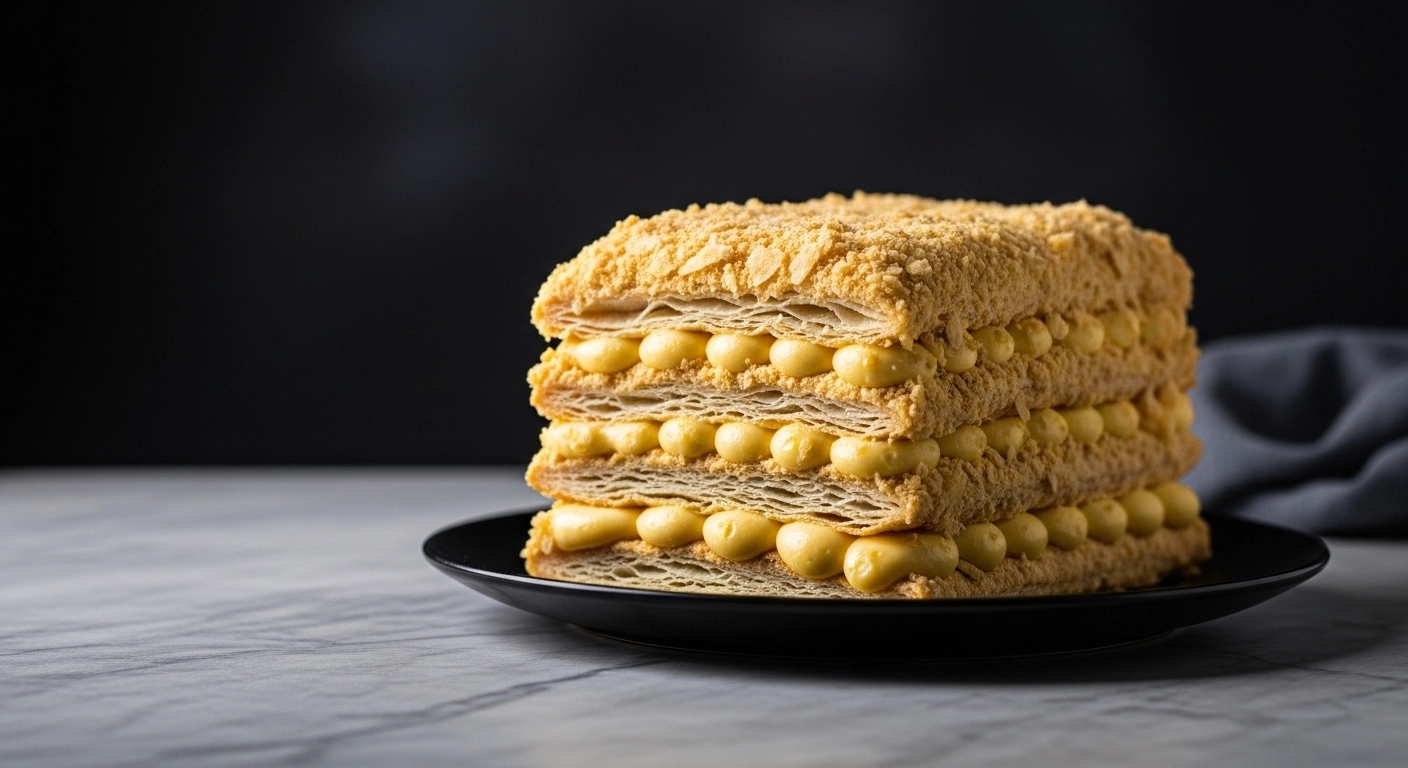
Napoleon Cake (Classic Layered Custard Cake)
Ingredients
Method
- Make the Pastry Dough
- In a large bowl, mix flour and salt.
- Cut in cold butter until crumbly.
- Add cold water and lemon juice, mixing just until dough forms.
- Divide dough into 6–8 balls, cover, and refrigerate for 1 hour.
- Bake the Layers
- Preheat oven to 400°F (200°C).
- Roll each dough ball into a thin circle.
- Bake each layer for 5–7 minutes until lightly golden.
- Cool completely. Reserve scraps for topping.
- Prepare the Custard Cream
- Heat milk until warm (not boiling).
- Whisk egg yolks, sugar, and flour until smooth.
- Slowly add warm milk while whisking.
- Return mixture to heat and cook until thick.
- Remove from heat, stir in butter and vanilla. Cool slightly.
- Assemble the Cake
- Place one pastry layer on a plate and spread cream evenly.
- Repeat with remaining layers.
- Cover top with cream and sprinkle crumbs or powdered sugar.
- Chill
- Refrigerate for at least 6 hours or overnight before slicing.
Notes
- The cake tastes best after resting overnight.
- For a lighter version, you can replace part of the custard with whipped cream.
If you love classic desserts with rich cream and flaky pastry, Napoleon cake is a treat you should absolutely know. This iconic layered dessert is famous for its delicate texture, indulgent custard filling, and fascinating history that stretches across Europe. In this guide, you’ll discover what Napoleon cake is, where it comes from, and the essential ingredients that give it its unforgettable taste.
What Is Napoleon Cake?
Napoleon cake is a traditional layered pastry dessert made from thin, crisp sheets of puff pastry filled with a creamy custard or pastry cream. The layers are stacked high, creating a balance between crunchy and silky textures. The top is usually finished with powdered sugar, icing, or crushed pastry crumbs.
You may encounter Napoleon cake under different names depending on the region. In France, it’s closely related to the mille-feuille, meaning “a thousand layers,” while in Eastern Europe and Russia, Napoleon cake has become a celebratory dessert often served during holidays and family gatherings.
What makes Napoleon cake truly special is the contrast:
- Crisp, buttery pastry layers
- Smooth, lightly sweetened cream
- A soft, cake-like texture after resting
The History of Napoleon Cake
The origins of Napoleon cake are both historical and culinary, blending legend with classic French baking traditions.
One popular story links the cake’s name to Napoleon Bonaparte, suggesting the dessert was created to honor him. While this connection is debated, the cake’s rise in popularity does align with the early 19th century, when French pastry techniques spread across Europe.
Another theory traces Napoleon cake back to the French mille-feuille. As French chefs traveled or influenced royal kitchens in Russia and neighboring regions, local bakers adapted the dessert. Over time, it evolved into what is now known as Napoleon cake, with slightly thicker cream layers and a softer texture once chilled.
In Russia, the cake gained special significance during the centenary celebration of Napoleon’s defeat in 1812. Bakers reportedly prepared a layered cake with crumb toppings symbolizing fallen enemies, turning the dessert into both a culinary and cultural symbol.
Today, Napoleon cake is enjoyed worldwide—not as a political statement, but as a timeless classic dessert.
What Makes Napoleon Cake Unique?
Napoleon cake stands out from other layered desserts for several reasons:
- Texture transformation: After resting, the crisp pastry absorbs moisture from the cream, becoming tender and cohesive.
- Simple but refined flavor: It relies on butter, milk, eggs, and vanilla rather than heavy flavorings.
- Versatility: Variations include whipped cream, sour cream frosting, or condensed milk-based fillings.
Unlike sponge cakes, Napoleon cake doesn’t rely on leavening. Instead, the magic comes from lamination and patience.
Napoleon Cake Ingredients
Below are the classic ingredients used to make traditional Napoleon cake. While recipes vary slightly by region, these components form the foundation.
Ingredients for the Pastry Layers
- All-purpose flour
- Unsalted butter (cold, high quality)
- Cold water
- Salt
- Vinegar or lemon juice (optional, for tenderness)
These ingredients create a flaky, puff-pastry-style dough that bakes into thin, crisp layers.
Ingredients for the Custard Cream Filling
- Whole milk
- Egg yolks
- Granulated sugar
- All-purpose flour or cornstarch
- Unsalted butter
- Vanilla extract or vanilla bean
The custard should be smooth, rich, and not overly sweet, allowing the pastry layers to shine.
Optional Toppings
- Powdered sugar
- Crushed pastry crumbs
- Light icing or glaze
These toppings add visual appeal and a subtle sweetness without overpowering the cake.
How Napoleon Cake Is Traditionally Assembled
Napoleon cake is assembled by alternating pastry layers and cream until the cake reaches its desired height—often 6 to 10 layers. The final layer is topped and gently pressed.
The cake is then refrigerated for several hours or overnight, which is essential. During this resting period:
- The pastry softens
- Flavors meld together
- The cake becomes easier to slice cleanly
This step is what gives Napoleon cake its signature melt-in-your-mouth texture.
Why Napoleon Cake Remains So Popular
Napoleon cake has endured for generations because it offers something many modern desserts don’t: balance. It’s rich without being heavy, sweet without being overwhelming, and elegant without being complicated.
Whether served at weddings, birthdays, or holidays, Napoleon cake feels special yet familiar—a dessert that connects tradition with comfort.
Final Thoughts on Napoleon Cake
Napoleon cake is more than just a dessert. It’s a layered expression of European baking history, simple ingredients, and patient craftsmanship. Now that you know what Napoleon cake is, its history, and its core ingredients, you can better appreciate every bite—or even try making it yourself.
If you’re exploring classic desserts or looking to add a timeless recipe to your collection, Napoleon cake is a perfect place to start. 🍰